Bad Founders Use Listings to Exit. Good Founders Get Destroyed By Them.
What an exchange listing actually is, why the asymmetry favors a clean exit for bad actors and a slow drain for builders, and the principle that gets you through it.
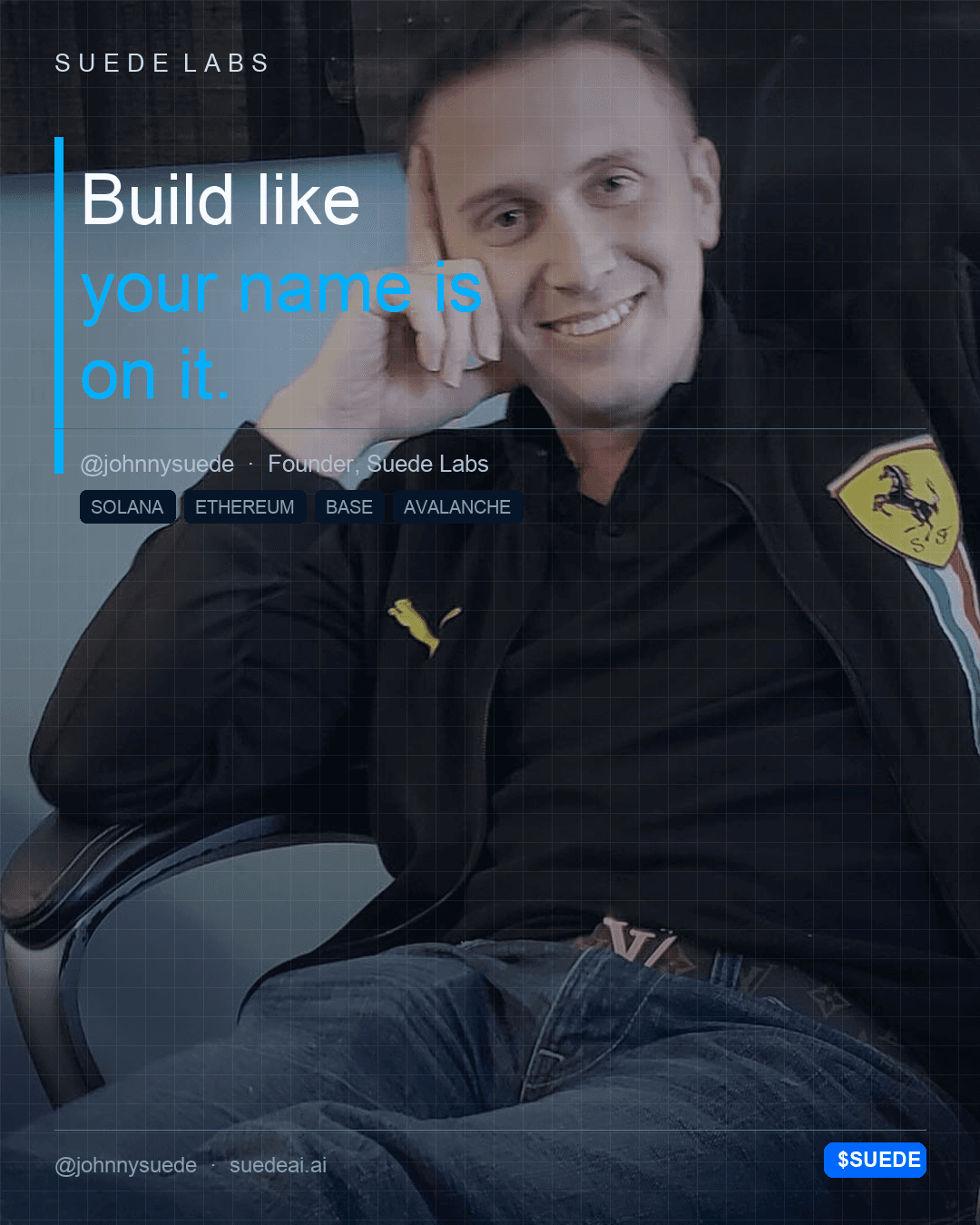
What an exchange listing actually is, and how to survive one.
The chart doesn't lie. But it also doesn't tell you who designed it. That's the part nobody talks about. By the time most founders figure it out, the damage is already done and the money is already gone. I'm writing this for the founders walking into the same room I walked into, with no map and no warning.
A listing is not a graduation. It's a coordinated liquidity event.
Most people treat an exchange listing like a finish line. You made it. The world can participate.
That's not what's happening.
Before any retail participant sees your token on a screen, a structure has already been built around it. Liquidity arrangements are set. Market makers are contracted. Price bands are quietly aligned. The exchange's internal teams are preparing for volatility management, not price discovery.
You're not opening a door. You're stepping into a room that was already furnished.
The exchange wants stability. The project wants perception. The market maker sits between both. And the market maker's primary tool, the one almost nobody discusses, is inventory.
The lever nobody warns you about
Market makers don't just provide liquidity. They manage inventory risk tied to agreements made before listing.
When inventory is balanced, spreads are tight and the book looks healthy. When it isn't, liquidity thins, spreads widen, and execution becomes painful for anyone trying to build a position.
Buy pressure gets absorbed. Selling stays unconstrained.
If you're trying to acquire size, you're fighting slippage. If you're trying to exit, the door is wide open. That asymmetry is mechanical. It creates the exact conditions needed for one side of the market to extract value while the other side struggles to execute.
The cleanest exit mechanism in the asset class
Listings are one of the cleanest exit mechanisms available to a bad-actor founder.
The playbook: list on a major exchange. Run a distribution event to generate volume and optics. Let the market maker structure the book. Retail flows in. And quietly, methodically, the founding team sells into that liquidity, anonymously, across venues, at scale, while the community celebrates the milestone.
Nobody can clearly track who is selling. The opacity is structural. Intent can't be attributed. Accountability diffuses. The exit is clean. The founder walks away.
That is a common playbook. Probably more common than anyone wants to admit.
What happens to the founder who stays
The market makers know exactly who that person is. They can see the tether moving. They can see you trying to defend price. They know that a founder with real conviction will keep reaching, will keep deploying, because walking away feels like betrayal.
That's the leverage. Your belief in what you built becomes the mechanism they drain.
The bad actor lists and exits clean with a smile. The builder bleeds out trying to hold the line. The market maker knows which one you are before you've said a word.
What it actually cost
There was no VC backstop. Suede was self-funded. Every dollar paid to the exchange, every dollar paid to the market maker, every dollar deployed into my own market making account trying to stabilize a book being consumed against me, came from one person. Direct costs ran into six figures. Broader pricing dislocation across investors, team holdings, and the participating community: directionally, into eight figures.
The structure compounded. A withdrawal-lock window sitting on top of asymmetric liquidity is a closed system designed to produce one outcome. By the time the lock lifted, price had been positioned to fall to roughly half of where it was traded outside the exchange. There was no one to call. No institutional partner. No emergency fund. Just me, the account balance, and the clock.
The hardest part wasn't the chart. It was the people who understood my conviction well enough to know I'd hold, know I'd buy back, know I wouldn't walk away, and who used that knowledge to position against me. That's not a market dynamic. That's betrayal with a trading strategy attached.
Where I came from
I'm a high school dropout. I lived on the streets, not as a redemption-arc metaphor, as actual lived experience. Years of it. I worked every low-level job that exists, paid attention, eventually landed in sales, learned it completely without a degree or a network, and built what I learned into a worldwide consortium that allowed me to retire at thirty-six.
I came back out of retirement because I saw something that needed to exist and believed I was the person to build it.
The throughline from the streets to the consortium to Suede is one principle:
**There is never a reason to bet against yourself.**
Not when conditions are bad. Not when resources are gone. Not when the people around you are betting against you with precision and information. Not when the chart is broken and the clock is ticking and there is no one to call.
Never.
That principle isn't a philosophy I adopted. It's something I arrived at through years of having no other viable option, and then watching it work, repeatedly, across every domain it has been tested in.
What founding actually breaks
Founders don't burn out from workload. They burn out from misaligned expectations, invisible political pressure, having to carry everyone's fear, pretending you're calm while putting out fires, building in the open while dealing with everything quieter in private, leading people who don't see the full map, getting judged by people who haven't built anything.
Founding will break you. But it breaks you into the version you actually need to be: the version that can handle pressure without combusting, make decisions without external validation, hold the vision when everyone else loses the plot, and operate on clarity instead of adrenaline.
By every logical deduction available, I should have stopped during the listing. Cut losses. Protected what remained. The attacks were personal. The financial damage was real. The betrayals were specific and calculated.
The thought never landed. Not once.
There was never a single moment where the long-term picture seemed impossible. That kind of confidence isn't certainty that everything will work out. It's the absolute knowledge that the only direction available is straight through it. You either have it or you don't.
What we're building
We're building in a space that has gotten quieter in a useful way. The people whose primary interest was bundled wallets and extraction mechanics have largely moved on. The noise that had nothing to do with building anything has receded.
[Suede](/founder) is the rights, IP, and authorship infrastructure for musicians, producers, and rights holders working in the AI and crypto era. Proof of creation. Programmable licensing. Royalty routing. Agent-commerce-ready endpoints. Four layers, treated as one product instead of four.
The thesis is durable: the rights layer is the only thing that turns AI-era creativity into durable income for the people doing the work. Without it, every track, voice, image, and dataset becomes a free input into someone else's economy. With it, creators carry their record with them, across platforms, across chains, across whatever surfaces emerge next.
For the founders reading this
By the time you're in your listing conversation, you're already late to understand the structure being built around you.
- Know where your capital sits and exactly how it can be consumed before you authorize it.
- Model the arbitrage conditions before launch.
- Understand the withdrawal mechanics of every exchange before you run any distribution event on it.
- Research your market makers like your project depends on it. Because it does.
- Know that the people closest to you may understand your commitment better than you think. That understanding is not always protective.
We went through multiple market makers during this process. Fired the first. The second was considered among the best in the asset class. The damage was still a losing fight under the conditions in place.
That's the terrain. Go in knowing it.
Closing
The chart is the result. The liquidity design is the cause.
Two kinds of founders go through listings. One uses the structure to exit quietly while the community cheers. The other deploys everything they have, quietly, invisibly, without a safety net, trying to give what they built a fair environment to be discovered. Pays the bills. Gets up the next morning thinking about the protocol.
The market doesn't distinguish between them in the moment. The community often can't tell either.
But there is a difference. And it matters. Not to the chart. To the record. And to the thing being built, slowly, expensively, without apology, toward the place it belongs.
We know what we have. We know what it's capable of. We know where it's going.
And we're not going anywhere.
— Jason Colapietro
*This piece reflects direct experience and informed market observation. Figures are directional estimates, not audited statements. Not financial advice; not an accusation of verified intent by any specific party.*